
The Benazir Nashonuma Program is a conditional cash transfer under BISP for pregnant and lactating women and their children under two. It pays a nutrition-linked stipend on top of the regular Kafaalat payment. Beneficiaries must attend antenatal checkups, immunization sessions, and nutrition counselling to stay enrolled. The program runs through dedicated Nashonuma Facilitation Centers, not the standard 8171 payment channels. This guide covers what it pays, who qualifies, and how enrollment works.
What the Nashonuma Program Covers
BISP designed Nashonuma in August 2020 as a Conditional Cash Transfer, according to program details published on pass.gov.pk. The core goal is preventing stunting in children under two years old. It also targets better weight gain in pregnant women and lower anaemia rates. The World Food Programme (WFP) runs the health and nutrition side under a formal partnership with BISP, renewed for two more years on October 3, 2024, per a press release on pid.gov.pk.
Who Qualifies for Nashonuma
Eligible beneficiaries fall into two groups: pregnant and lactating women, and their children under two years old. Per pass.gov.pk, the cash support applies specifically to families already part of BISP’s beneficiary base. This means Nashonuma builds on an existing Kafaalat registration rather than starting from scratch. Families enroll in person at their nearest Nashonuma Facilitation Center, where staff confirm identity and eligibility before adding them to the program.
How Much the Stipend Pays
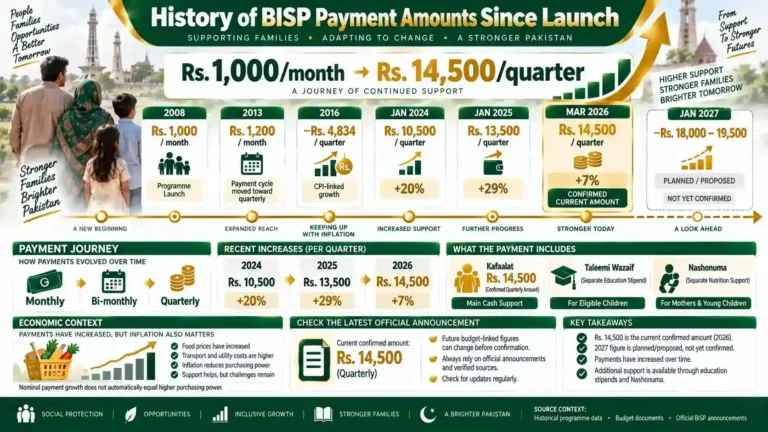
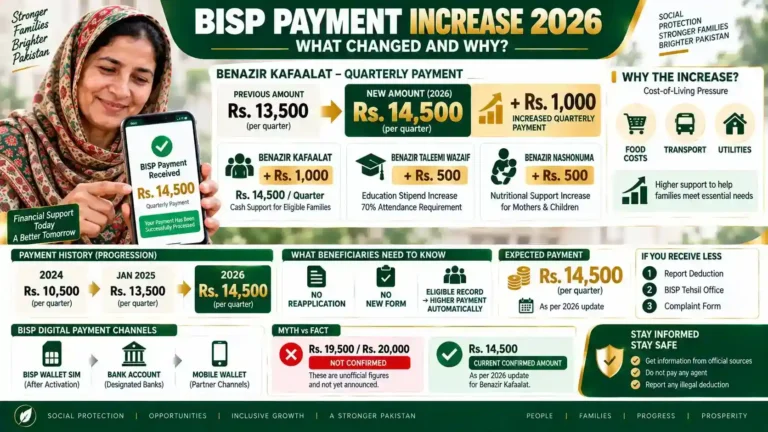
The original 2020 design set the quarterly rate at Rs 2,000 per pregnant or lactating woman and per boy child, and Rs 2,500 per girl child, according to pass.gov.pk. The October 2024 BISP-WFP partnership renewal raised this to Rs 2,500 per woman and boy child, and Rs 3,000 per girl child, per the pid.gov.pk press release. A further Rs 500 increase was announced across the program on February 18, 2026, ahead of Ramadan, alongside similar raises for Kafaalat and Taleemi Wazaif, as reported by ARY News. Adding that increase to the 2024 base puts the amount at roughly Rs 3,000 per quarter for women and boy children, and Rs 3,500 for girl children — though BISP has not published a separate category-wise breakdown of the February 2026 raise, so beneficiaries should confirm the exact figure at their Facilitation Center. Alongside the cash, families also receive Specialized Nutritious Food (SNF) as part of the same package, per pass.gov.pk.
Why It Matters for BISP Families
Nashonuma runs as a separate layer on top of Kafaalat, not a replacement for it. According to a government budget-speech report carried by APP, BISP supported 1.5 million pregnant and lactating women and 1.6 million children under the program during FY2024–25. BISP also launched a real-time digital dashboard for the program on February 24, 2026, to track enrollment and disbursement, as reported by ARY News. Families reviewing where Nashonuma fits among BISP’s other schemes can check the full list of active Benazir and Ehsaas welfare programs, which lays out Kafaalat, Taleemi Wazaif, Ramzan Package, and Ehsaas side by side.
Common Misunderstandings
Being a Kafaalat beneficiary does not automatically enroll a family in Nashonuma. Registration at a Facilitation Center is a separate, required step. Missing a scheduled health checkup is not a minor formality — it can pause the quarterly payment. In practice, most Nashonuma payment pauses trace back to a missed growth-monitoring visit rather than a system error, so resolving it directly at the Facilitation Center works faster than waiting for the next quarter.
FAQs
What is the Benazir Nashonuma Program?
It is a BISP conditional cash transfer for pregnant and lactating women and children under two. It pays a nutrition-linked stipend tied to health checkups and immunization. WFP supports the health and nutrition delivery alongside BISP.
Who is eligible for Nashonuma?
Pregnant women, lactating women, and children under two from BISP beneficiary families qualify. The family generally needs an existing Kafaalat registration first. Eligibility is confirmed in person at a Nashonuma Facilitation Center.
How much is the Nashonuma stipend in 2026?
As of the February 2026 increase, the rate works out to roughly Rs 3,000 per quarter for women and boy children, and Rs 3,500 for girl children. This is based on the 2024 rates plus the confirmed Rs 500 raise. BISP has not published an exact category-wise figure for the 2026 increase, so confirming at the Facilitation Center is best.
Is Nashonuma the same as Kafaalat?
No. Kafaalat is the main unconditional quarterly cash payment for BISP households. Nashonuma is an additional, condition-based stipend layered on top of it for eligible women and young children.
How do I enroll in the Nashonuma Program?
Visit the nearest Nashonuma Facilitation Center with your CNIC. Staff will verify your identity and eligibility against BISP’s records. Enrollment ties directly into the health and nutrition conditions the program requires.
What happens if I miss a required health checkup?
Missing an antenatal visit, immunization session, or growth check can pause the quarterly stipend. The fix is usually to attend the next available session at the Facilitation Center. Repeated missed checkups can affect continued eligibility for the payment.