A BISP message or call is fake the moment it comes from anything other than the short code 8171. That one detail rules out most scam attempts before you need to check anything else. Genuine BISP contact never asks for a processing fee, never asks for your ATM PIN or OTP, and never threatens to cancel your stipend if you don’t reply within minutes. This guide covers the scam patterns beneficiaries are reporting right now, how to confirm a message is real, and what to do if you’ve already responded to one.
The Scam Patterns Beneficiaries Report Most
Fraud attempts against BISP beneficiaries tend to repeat the same handful of tricks. Knowing the pattern is faster than checking every message line by line.
The Fake Payment Approval Message
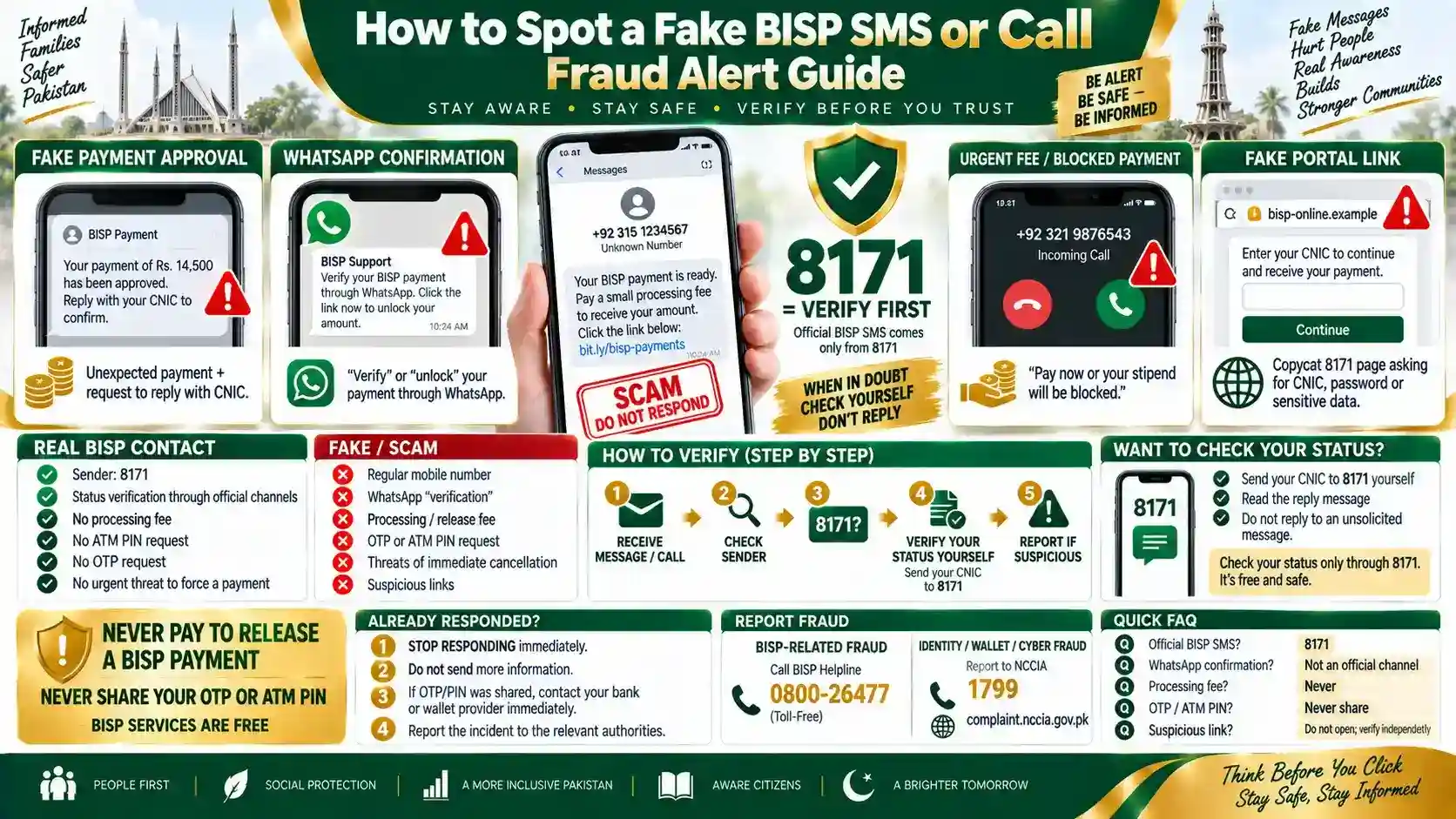
This message claims you’ve been approved for a large, unexpected amount and asks you to reply with your CNIC to confirm it. Genuine BISP payments are never confirmed by SMS reply — they’re checked by sending your CNIC to 8171 yourself, not the other way around. Treat any message that names a specific rupee figure and demands a reply as a red flag.
The WhatsApp “Confirmation” Request
Some messages direct you to a WhatsApp number to “verify” or “unlock” your payment. BISP’s payment status system runs through SMS to 8171 and the official 8171.bisp.gov.pk portal — not WhatsApp. Any WhatsApp number claiming to represent BISP is not an official channel.
The Urgent Deduction or Blocked Payment Call
A caller says your payment is on hold and a small fee is needed to release it, sometimes framed as a biometric or verification charge. A real BISP disbursement never requires a fee before release. Hanging up costs nothing; paying does.
The Fake Portal Link
A text or WhatsApp message includes a link that looks like the 8171 portal but leads to a copycat page asking for your CNIC and a password. The real portal never asks for a password to check payment status. Type the address directly instead of tapping a forwarded link.
Where to Report a Fake BISP Message or Call
For anything tied to your BISP stipend directly — a suspicious deduction, a fake payment message, or general BISP fraud — call the BISP helpline at 0800-26477. For identity theft, wallet fraud, or a scam site collecting your CNIC, report it to Pakistan’s National Cyber Crime Investigation Agency on their 24/7 helpline, 1799, or through complaint.nccia.gov.pk.
If you’re unsure which office handles your problem, BISP’s Support & Help page walks through the current complaint routes and verification steps for cases like this.
How to Verify a Message Is Real
Check the sender first, before reading anything else. Official BISP communication is sent only from the short code 8171, and BISP itself has repeatedly confirmed this in public statements. Any number, WhatsApp account, or social media page claiming to speak for BISP outside that short code is not official.
Next, check what’s being asked. Real BISP contact never requests a fee, your OTP, or your bank PIN — a request for any of these is the clearest sign of fraud. If you want to confirm your own status, send your CNIC to 8171 yourself rather than replying to the message you received.
In practice, most fake BISP messages share a detail that’s hard for scammers to fake convincingly: they ask for money or an OTP before releasing a payment, and the real programme never does either.
What to Do If You Already Shared Your CNIC or Sent Money
Stop responding to the number immediately — don’t send any further information, even to “cancel” the earlier request. If you shared your OTP or wallet PIN, contact your mobile wallet provider or bank right away to flag the account and check for unauthorized transactions. If you sent money for a “processing fee,” that payment is very unlikely to be recoverable through the scammer directly, so your next step is reporting it rather than chasing it.
Where to Report a Fake BISP Message or Call
For anything tied to your BISP stipend directly — a suspicious deduction, a fake payment message, or general BISP fraud — call the BISP helpline at 0800-26477. For identity theft, wallet fraud, or a scam site collecting your CNIC, report it to Pakistan’s National Cyber Crime Investigation Agency on their 24/7 helpline, 1799, or through complaint.nccia.gov.pk.
If you’re unsure which office handles your specific problem, my8171’s Support & Help page lists the current BISP complaint routes and verification steps for exactly this kind of situation.
Frequently Asked Questions
How do I know if a BISP SMS is real or fake?
Check the sender first. Genuine BISP messages come only from the short code 8171, never from a regular mobile number or WhatsApp account. If the sender doesn’t match, treat the message as fake regardless of what it claims.
Does BISP ever contact beneficiaries through WhatsApp?
No. BISP’s payment status and verification system works through SMS to 8171 and the official 8171.bisp.gov.pk portal, not WhatsApp. Any WhatsApp number asking you to “confirm” a BISP payment is not an official channel.
Can a real BISP call ask for a fee before releasing payment?
No. BISP never charges a fee, deposit, or “verification charge” to release a stipend. A call demanding payment before your money is released is a scam, no matter how official it sounds.
What should I do if I already gave my CNIC to a fake BISP number?
Stop responding to that number and don’t send further details. If you also shared an OTP or bank PIN, contact your wallet provider or bank immediately, then report the number to the National Cyber Crime Investigation Agency at 1799.
Where do I report a fake BISP SMS or call?
Report stipend-specific fraud to the BISP helpline at 0800-26477. Report identity theft or wallet fraud to the NCCIA at 1799 or through complaint.nccia.gov.pk. For the full list of scams to watch for — fake agents, payment-point deductions, fake websites, and more — see our overview of common BISP scams.
Is 8171 the only number BISP uses to contact beneficiaries?
Yes. BISP has stated publicly that all authentic messages come from 8171 only, and any other number claiming to represent the programme is fraudulent.
One Comment
Comments are closed.