
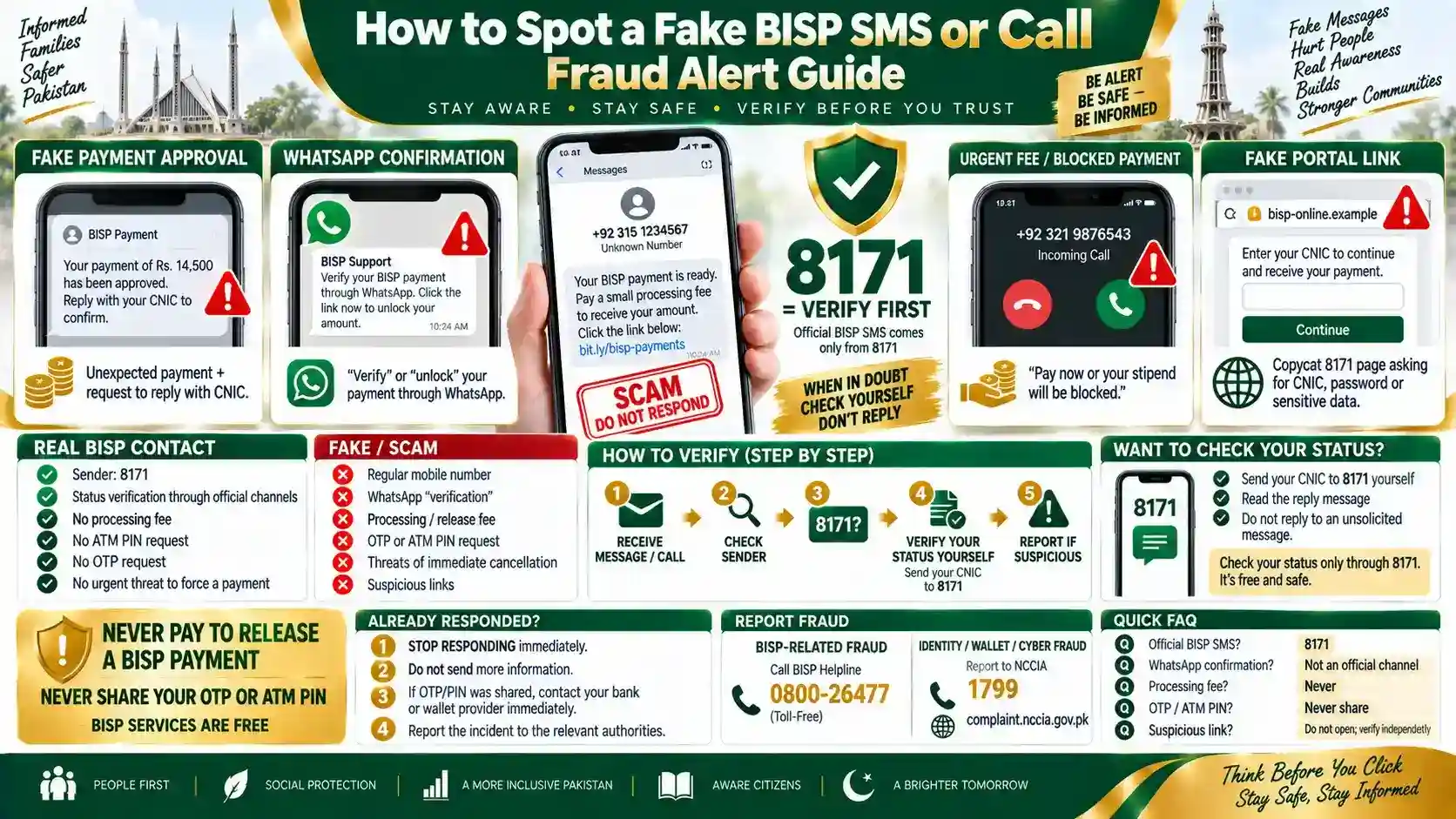
Common BISP scams follow predictable patterns, and this guide is the complete overview of the ones to watch for — fake SMS and calls, fake agents demanding fees, payment-point deductions, and fake websites — plus how to verify what’s real and where to report. For deeper dives, see our specialist guides on spotting fake BISP SMS and calls and on telling real BISP sources from fake ones.
Fake SMS or Calls Demanding Money
Scammers send messages claiming a payment is ready, then ask for a fee to release it. Genuine BISP messages come only from the number 8171, according to BISP’s own public statements. Any message asking for money to “unlock” or “process” a payment should be treated as fraud, regardless of how urgent it sounds.
Fake Registration or Survey Fees
Some scammers charge people to register or update their BISP details. BISP has repeatedly confirmed, including during official field visits, that registration and dynamic surveys carry no fee at all. If someone asks for payment to complete a survey or update, that request alone is enough to walk away.
Fake Websites and Social Media Pages
Copycat websites and social media pages sometimes mimic BISP’s branding to collect personal information. BISP’s official Facebook page carries a photograph of Shaheed Mohtarma Benazir Bhutto along with a blue verification badge, which beneficiaries can use to confirm the real page. A page or site without these markers should be treated with caution before entering any CNIC or personal details.
Deductions at Payment Points
Some agents or retailers have deducted a portion of a beneficiary’s payment before handing over the rest. BISP leadership has directed strict action against staff or agents responsible for these deductions during field visits. Beneficiaries are entitled to their full payment amount and a receipt every time.
How to Verify What’s Real
Check any suspicious message against the number it came from — only 8171 is legitimate. Confirm a payment or status directly through the 8171 web portal or SMS service rather than trusting a link sent to you. In practice, most reported BISP scams start with a phone number other than 8171, since fraudsters count on beneficiaries not knowing that detail.
What to Do If You Already Responded
If personal information was already shared with a suspicious number or site, don’t panic — start by not sending any further money or codes to that contact. Change any linked mobile PIN or wallet password if one was shared. Report the incident promptly so BISP can flag the number and protect other beneficiaries.
Where to Report
Report a suspicious message, call, or deduction to the BISP Helpline at 0800-26477. For a suspected fraudulent website or online scam, the FIA Cyber Crime Wing can also be reached at 1991. For anything related to complaints, verification issues, or reporting a problem, BISP’s support and complaint channels cover the full range of options available to beneficiaries.
FAQs
How do I know if a BISP SMS is real?
Check the sender. Genuine BISP messages come only from the number 8171. Anything from a different number should be treated as fraudulent.
Is BISP registration ever paid?
No. Registration, surveys, and record updates are always free. Any request for a fee is a clear warning sign.
What if I already shared my CNIC with a suspicious caller?
Stop any further contact with that number and avoid sending money or codes. Report the incident to the BISP Helpline so the number can be flagged.
What if an agent asked for a cut of my payment?
You’re entitled to your full payment and a receipt every time. Report the agent or retailer to the BISP Helpline immediately.
How do I verify BISP’s official social media pages?
Look for the photograph of Shaheed Mohtarma Benazir Bhutto and the blue verification badge on BISP’s official Facebook page. Pages without these markers should be treated with caution.
Where do I report a BISP scam?
Call the BISP Helpline at 0800-26477 for anything related to BISP directly. For online scams or fraudulent websites, the FIA Cyber Crime Wing can be reached at 1991.
One Comment