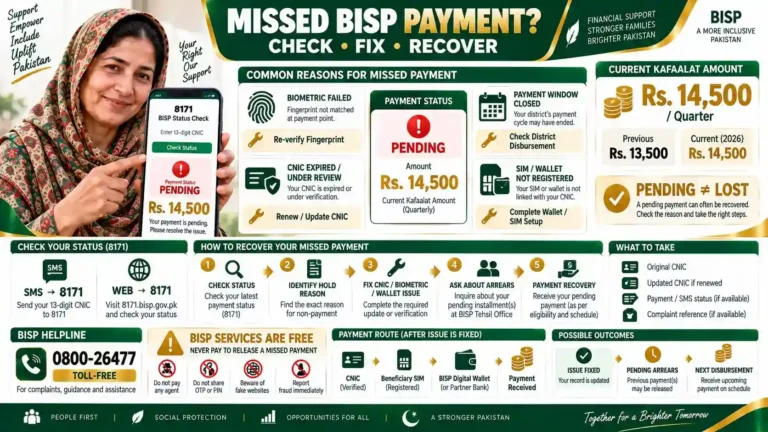
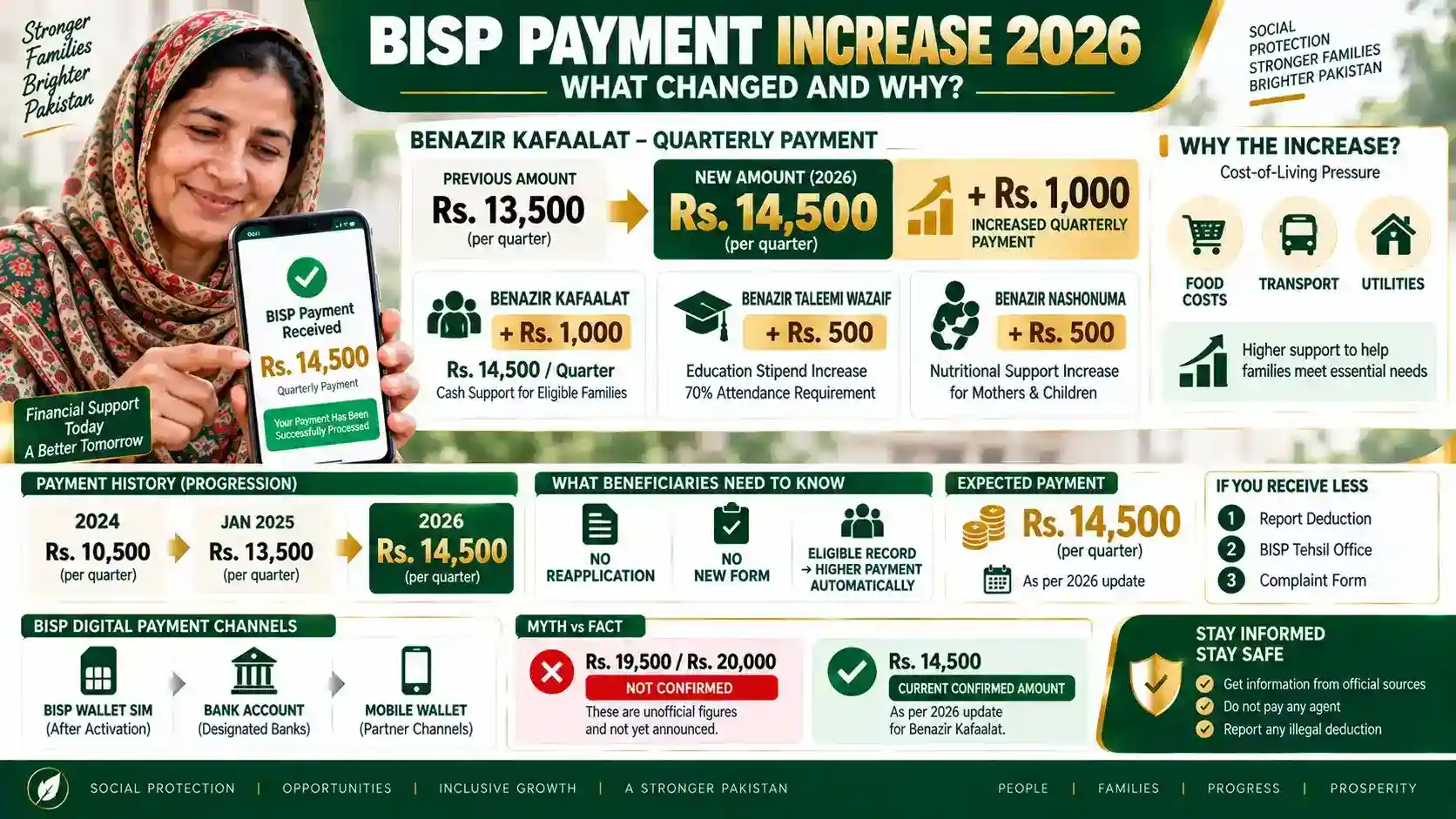
BISP’s quarterly Kafaalat payment rose from Rs. 13,500 to Rs. 14,500 in 2026, an increase of Rs. 1,000 per eligible household. Two related programs grew alongside it — the Benazir Education Stipends program added Rs. 500, subject to the existing 70 percent school attendance requirement, and the Benazir Nashonuma program also rose by Rs. 500. BISP Chairperson Senator Rubina Khalid announced the increase, with the additional Rs. 1,000 included in the payment scheduled for the Ramadan disbursement cycle. The change follows a similar increase the year before, when the quarterly amount moved up from Rs. 10,500 to Rs. 13,500 starting in January 2025.
How the 2026 Increase Breaks Down
The Rs. 1,000 rise applies to the core Benazir Kafaalat quarterly stipend, taking it to Rs. 14,500 per eligible household. This new amount started from the current quarter at the time of announcement, and beneficiaries were urged to confirm they receive the full Rs. 14,500 when collecting their payment.
The increase reaches two other programs as well. Students under Benazir Taleemi Wazaif now receive Rs. 500 more per term, tied to the same attendance rule that already governs the scheme. Pregnant women and young children covered under Benazir Nashonuma also see an extra Rs. 500, aimed at nutritional support rather than the general household stipend.
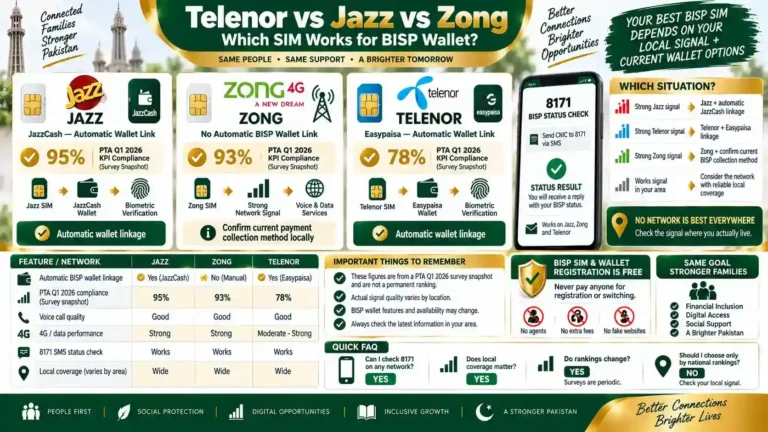
The rollout sits inside a wider push on the payment side too. BISP shared the update through its official channels, framing the increases as support for financially vulnerable households and stronger access to education and healthcare for children. Alongside the amount change, BISP has expanded digital wallets, free SIM issuance at BISP offices, and bank interoperability across seven partner banks, so more beneficiaries can withdraw funds without depending on a single fixed agent.
Why the Government Raised BISP Payments
The stated reason is cost of living. Rising prices for food, transport, and utilities were cited as the main pressure behind the increase, consistent with the pattern from the January 2025 jump as well. Both increases came from budget decisions rather than a change in who qualifies — eligibility rules stayed the same; only the payment amount moved.
Why This Matters For Your Payment
If you are already marked eligible, the increase applies automatically at your next disbursement. No reapplication or new form is needed for the Kafaalat amount itself. For Taleemi Wazaif and Nashonuma, the higher amount only applies once the underlying condition — attendance for Wazaif, registration status for Nashonuma — is met, the same as before the increase.
The current BISP payment schedule shows exact disbursement dates and lets you confirm whether this quarter’s payment, including the increased amount, has been released for your account. Checking there before visiting an office in person saves a wasted trip if the payment hasn’t processed yet.
If you collect less than the confirmed Rs. 14,500, you can file a complaint at your nearest BISP tehsil office, reporting the shortfall to the assistant director or a responsible official and requesting a complaint form for the deduction. Officials investigate these reports and can direct the paying bank to take action against an agent found responsible.
Common Misunderstandings
“BISP payments are now Rs. 19,500 or Rs. 20,000.” These figures come from budget proposals and IMF discussions reported in mid-2026, not from a confirmed BISP announcement. As of this update, the confirmed quarterly Kafaalat amount is Rs. 14,500 — any higher figure circulating online reflects a proposal still under discussion, not money already being disbursed.
“The increase means I need to update my registration.” Registration and the payment amount are separate. The Rs. 14,500 applies to accounts already marked eligible; it doesn’t require a new survey or fresh documents on its own.
“Every BISP program went up by the same amount.” Kafaalat rose by Rs. 1,000; Taleemi Wazaif and Nashonuma rose by Rs. 500 each. Treating all three as identical increases leads some beneficiaries to expect the wrong figure at collection.
In practice, most cases of receiving less than Rs. 14,500 trace back to an agent-level deduction rather than a program-wide change, which is why BISP routes these complaints through the local tehsil office instead of requiring a fresh application.
Frequently Asked Questions
How much is the new BISP Kafaalat payment in 2026?
The quarterly Kafaalat payment is Rs. 14,500, up from Rs. 13,500. The increase applies to eligible households from the quarter it was announced onward.
Do I need to reapply to get the increased amount?
No. If your record is already marked eligible, the higher amount applies automatically at your next scheduled disbursement.
Does the increase apply to Taleemi Wazaif and Nashonuma too?
Yes, but by a different amount. Both programs rose by Rs. 500 each, separate from the Rs. 1,000 Kafaalat increase, and Taleemi Wazaif still requires meeting the attendance condition.
What should I do if I received less than Rs. 14,500?
File a complaint at your nearest BISP tehsil office and request a deduction complaint form. Officials investigate the report and can direct the bank to take action if the claim is confirmed.
Will BISP payments increase again after 2026?
Reports have mentioned figures like Rs. 19,500 or Rs. 20,000 tied to IMF talks and future budget proposals. These remain under discussion and are not confirmed increases, so the current disbursed amount stays Rs. 14,500 until an official announcement says otherwise.
When did the last BISP payment increase happen before this one?
The previous increase took the quarterly amount from Rs. 10,500 to Rs. 13,500, starting in January 2025. The 2026 increase builds on that same quarterly stipend.