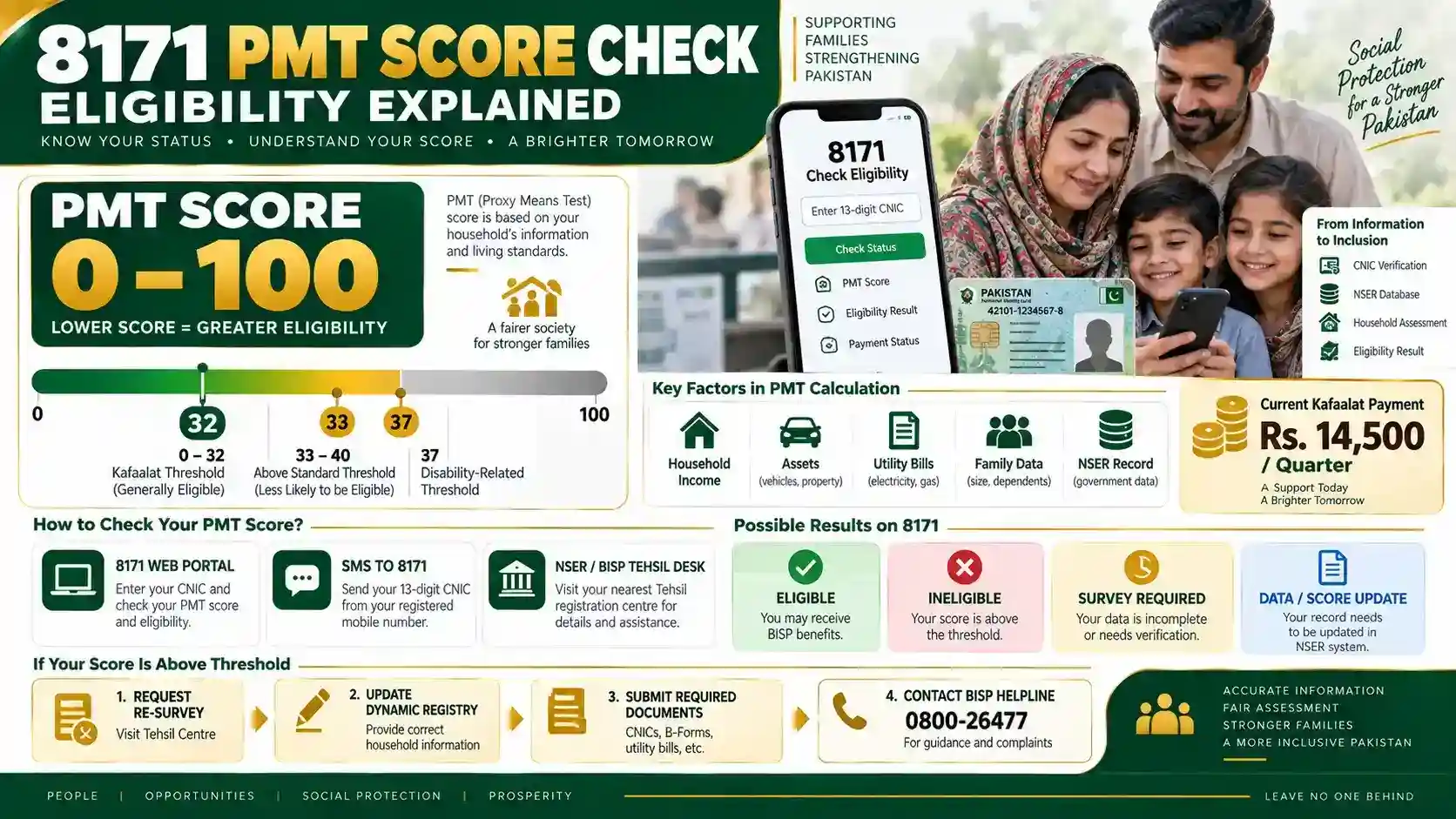
A PMT score is the number BISP uses to measure how poor your household is compared to others in Pakistan. It comes from the Proxy Means Test, a statistical model that scores every surveyed household somewhere between 0 and 100. A lower score means your household looks poorer on paper, based on things like assets, income, and living conditions. This score, not your income alone, decides whether your household qualifies for Kafaalat.
Your score comes directly from the answers your household gave during the NSER survey, so nothing about it can be checked or changed outside that record. BISP recalculates nothing when you look your result up online — the portal simply shows the score your survey already produced.
How Is the PMT Score Calculated?
The Proxy Means Test estimates your household’s economic position from observable details rather than a self-reported income figure. BISP collects these details through the NSER survey and runs them through the same standardized model for every household in the country.
Household Composition and Identity
Your household size, the number of dependents, and the relationships between members all factor into the score. A larger household with fewer working adults typically scores differently than a smaller one.
Assets and Living Conditions
Land, livestock, vehicle ownership, and the condition of your home all feed into the assessment. These physical indicators help distinguish a household with real financial strain from one with visible assets.
Income From All Sources
Formal salary, informal work, remittances from abroad, and agricultural income are all recorded during the survey. BISP checks these figures against other data sources during validation.
Additional Factors That Raise Your Score
Foreign travel, a government salary, or a high monthly phone bill have historically counted against a household’s score under this model (Dawn, December 2019). None of these disqualify a household by themselves, but each one pushes the score upward.
What PMT Score Do You Need to Qualify?
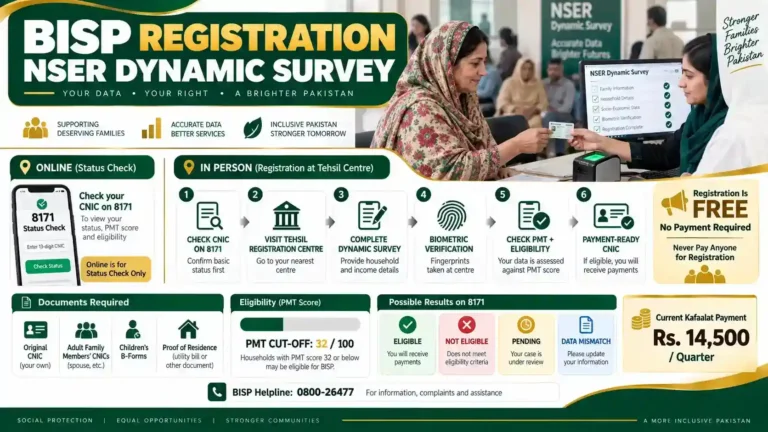
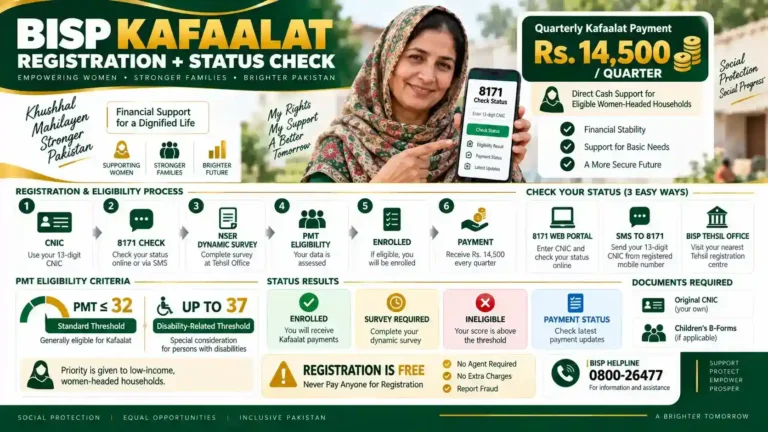
The current cutoff for Kafaalat eligibility is 32, approved by the BISP Board, and it rises to 37 for households with a person with a disability (bisp.gov.pk). A household scoring at or below the cutoff qualifies. A score even slightly above it does not, regardless of how close the two numbers are.
Why Your PMT Score Matters for Your BISP Payment
Your PMT score is the single factor that decides Kafaalat eligibility, not your registration date or how long you’ve waited. If your score sits above the cutoff, no other document or step changes that outcome until your circumstances genuinely change. In practice, most PMT score confusion comes from comparing scores between neighboring households rather than checking the cutoff itself. If you haven’t confirmed your own result yet, this 8171 PMT score check by CNIC walks through how to look it up and what the result means for your eligibility.
Common Misunderstandings About PMT Score
“A PMT score is the same as my income.” It isn’t. Income is only one input among several, alongside assets, household size, and living conditions.
“My score can change just by asking BISP to review it.” A score only changes when your underlying NSER data changes, through a new survey or an approved update. There’s no manual override.
“Everyone with the same income gets the same score.” Two households with similar income can land on different scores if their assets, household size, or living conditions differ.
FAQs
What does a PMT score of 32 mean?
It means your household’s PMT score, calculated from your NSER survey answers, falls exactly at BISP’s current eligibility cutoff. A score of 32 or below qualifies for Kafaalat under the standard cutoff.
Can I improve my PMT score to qualify?
Your score reflects your household’s actual circumstances at the time of your survey. It only changes if those circumstances change and get recorded in a new or updated survey.
Is the PMT score the same for every BISP programme?
No. The standard Kafaalat cutoff is 32, but it rises to 37 for households with a person with a disability. Other BISP sub-programmes may apply different criteria.
Why did my neighbor qualify with a similar income to mine?
Income is only one factor in the PMT calculation. Differences in household size, assets, or living conditions can produce different scores even with similar income.
How do I check my own PMT score?
Check your status through the official 8171 portal or by sending your CNIC via SMS to 8171. Both methods reflect the score already generated from your NSER survey.
Does a high phone bill really affect my PMT score?
Yes. Indicators like a high monthly phone bill have historically factored into the model as a sign of stronger financial standing. It’s one of several inputs, not a standalone disqualifier.